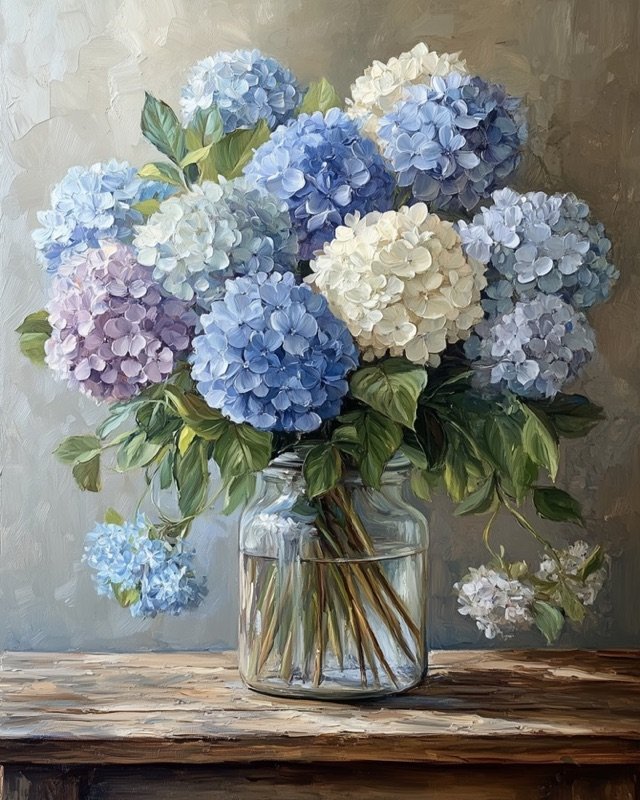
Choosing wall art feels straightforward until you're standing in your living room holding a print that looked perfect online but feels completely wrong on the wall. The difference between art that transforms a space and art that disappears into it comes down to three principles: scale, colour, and framing.
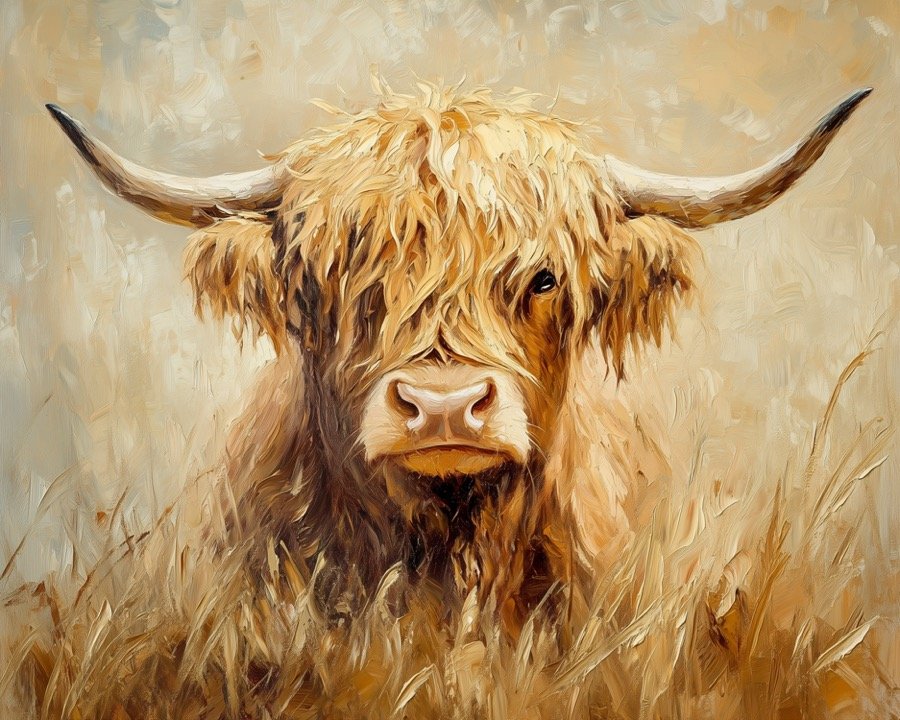
From the shop
Highland Cow Portrait — Statement Piece
Shop this print on Etsy →Getting the Scale Right
Scale is the most common mistake people make. The most frequent error is choosing art that is too small for the wall. A rule that professional interior designers use religiously:
Your art should cover between 57% and 75% of the wall or furniture it sits above.
In practice, this means:
- Above a 180cm sofa → your art or grouping should span 100–135cm
- Above a double bed (150cm) → your art should span 90–112cm
- On an empty 240cm wall → consider a 100–150cm wide print or a curated gallery
Use our Print Size Calculator to work out the ideal dimensions for your specific wall measurements.
Single Print vs Gallery Wall
A single oversized print creates drama and focus. A gallery wall tells a story. The choice depends on how many pieces you want to hang and the visual weight of the room. For minimalist interiors, one large statement print almost always wins.
Colour Theory for Wall Art
The fastest way to choose art that works with your room is the 60-30-10 rule: your dominant colour (walls, floors) takes 60%, your secondary colour (furniture, rugs) takes 30%, and your accent colour (cushions, art) takes 10%.
Matching vs Contrasting
You have two approaches:
- Harmonious: Choose art in the same colour family as your walls. Sage green walls + botanical green prints = cohesive, calm.
- Contrasting: Choose art in a colour opposite your walls on the colour wheel. Dark blue walls + warm gold-toned art = dramatic and sophisticated.
Use our free Colour Palette Generator to build a colour scheme before you commit to a print.
The Safe Choice: Neutral + One Accent
If in doubt, a neutral palette with a single accent colour is almost always safe. Black frames, cream matting, and one gold or green accent in the artwork works in virtually every interior style.
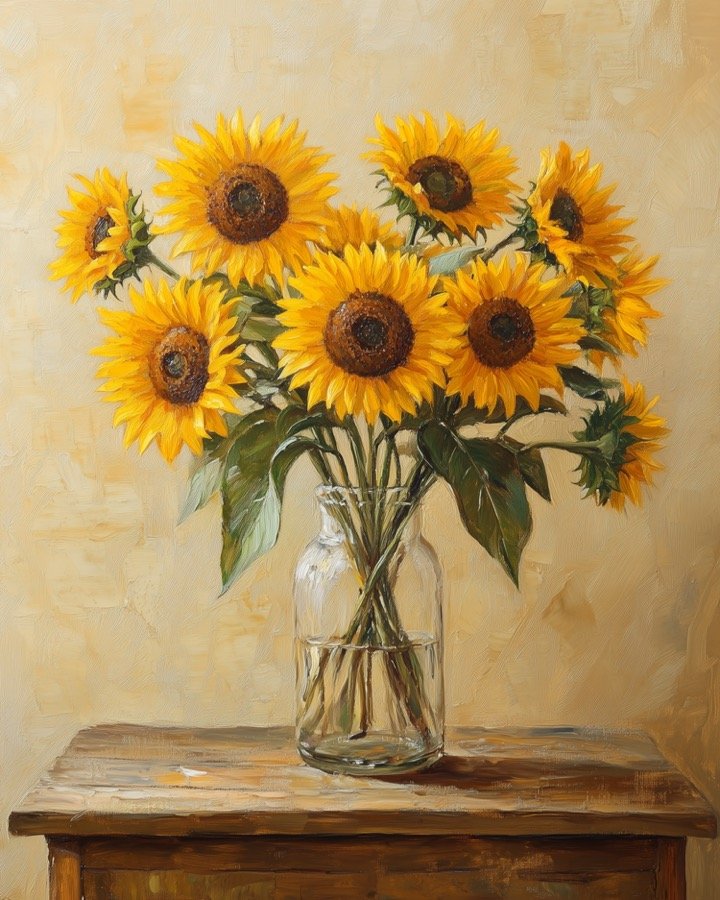
From the shop
Botanical & Floral — Oil Painting Prints
Shop this print on Etsy →Framing Makes or Breaks the Print
The same print can look cheap or museum-quality depending on the frame. Here's the hierarchy:
- Best: Custom framing with a deep reveal and white or off-white mat board
- Great: IKEA RIBBA or similar — consistent, clean, widely available
- Good: Any thin-profile frame in black, white, natural oak, or black walnut
- Avoid: Ornate gold frames with digital prints (they fight each other visually)
The White Border Effect
Many of our prints include a white border built into the design — this is intentional. It creates a built-in mat effect, so even when placed in a frameless clip frame, the print looks finished and professional.
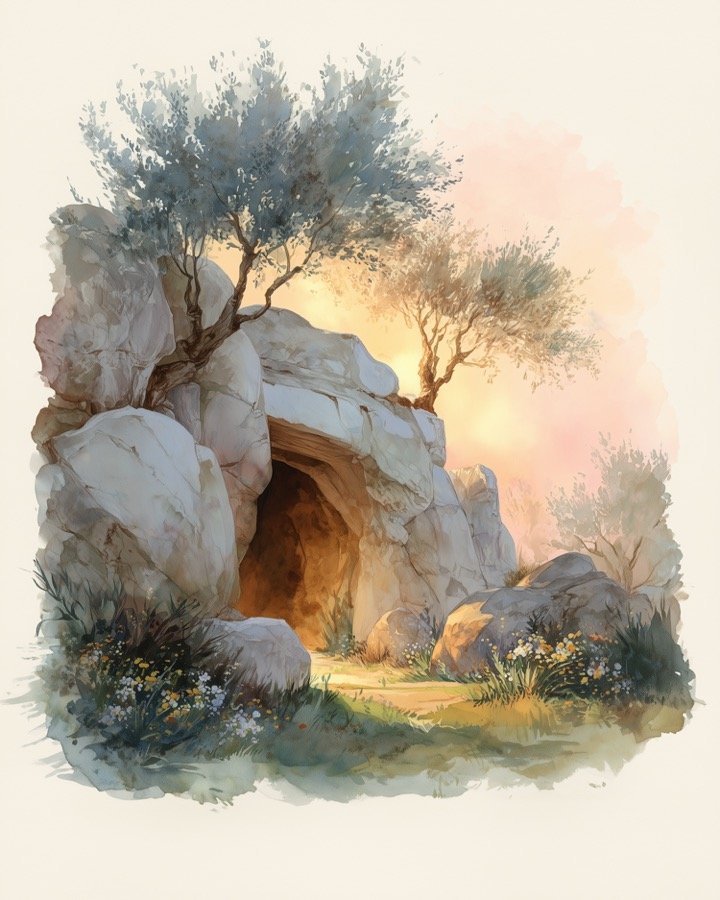
From the shop
Christian Wall Art — Faith & Inspiration
Shop this print on Etsy →Placement and Hanging Height
The universal rule: hang art so the centre of the piece is at eye level — roughly 145–155cm from the floor. This is the standard used by galleries worldwide.
Exceptions:
- Art hung above furniture: allow 15–20cm gap between the top of the furniture and the bottom of the frame
- Staircase art: follow the slope of the stairs with the centre of each piece at eye level as you walk
- Bathroom art: hang slightly higher than standard since you're often looking up from a seated position
Choosing Art by Interior Style
Different design styles suit different art types:
- Scandi / minimalist: Line art, botanical studies, muted landscapes
- Traditional / classic: Oil-style florals, equestrian prints, faith-based art
- Bohemian: Warm botanicals, earthy landscapes, vintage illustrations
- Modern / industrial: Typographic prints, architectural studies, geometric abstracts
- Coastal / cottage: Seagull prints, soft watercolour seascapes, botanical shells
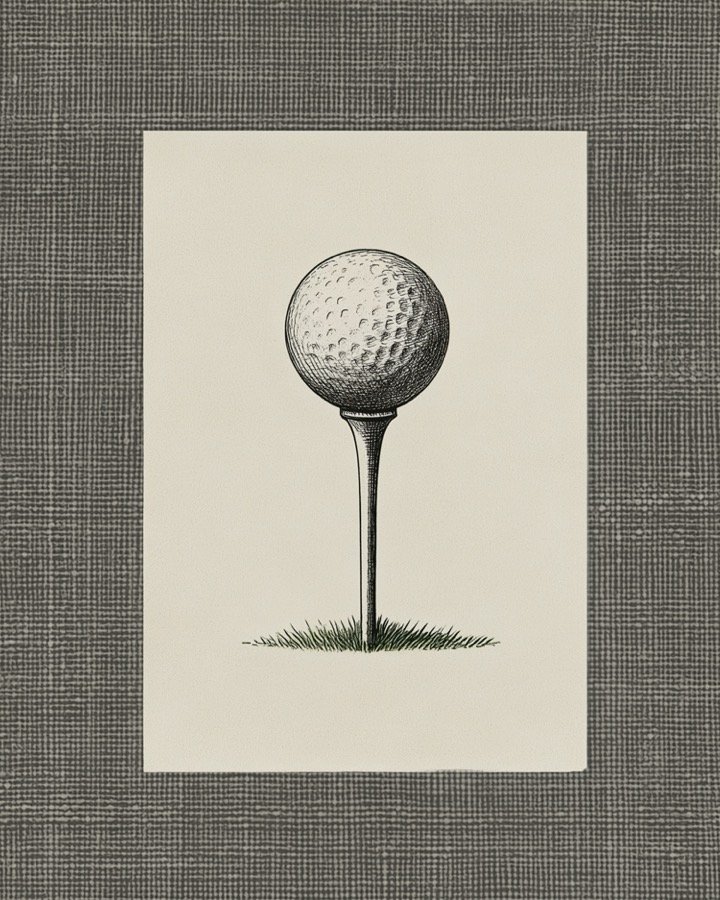
From the shop
Golf Wall Art — Popular Gift Idea
Shop this print on Etsy →Need Help Choosing?
Use Our Free Design Tools
Colour palette builder, print size calculator, and font pairing tool — all free, no sign-up required.
Explore Free Tools →